It began with a pair of bird feeders set out by an RV-dwelling couple on a small plot of land above the Rio Grande. What those feeders attracted would eventually draw birders from across North America — and transform 2.6 acres of Starr County riverbank into one of the most celebrated neotropical birding destinations in the United States.
Salineño Wildlife Preserve sits at the end of a road in the small community of Salineño, in the upper Rio Grande Valley, where the river bends close and the Mexican shoreline feels near enough to touch. The preserve is modest in size — just 2.6 acres of riparian scrub and native vegetation — but its location at the geographic and ecological crossroads between the United States and Mexico has made it disproportionately significant in the world of birding. Species that occur nowhere else in the United States regularly appear here, drawn by the river, the habitat, and the feeders that started it all.
Salineño Wildlife Preserve has faced ongoing uncertainty related to proposed border wall construction in Starr County. Local and regional environmental organizations and activists have been actively advocating for the preservation of the site and the surrounding riparian habitat. Updated federal maps reported in May 2026 show a planned path of primary border wall now extending through Starr County and along the Rio Grande through the preserve itself — a shift from earlier assurances that Salineño would be spared. It's not yet clear how this could affect the preserve's 2026–2027 feeding station season. Read the full report at Border Report →
The best way to show support is simple: visit Salineño, photograph its birds, and share its beauty with others — every visitor and every photo helps keep this small stretch of riverbank on the map.
The Beginnings — A Feeding Station on the Rio Grande
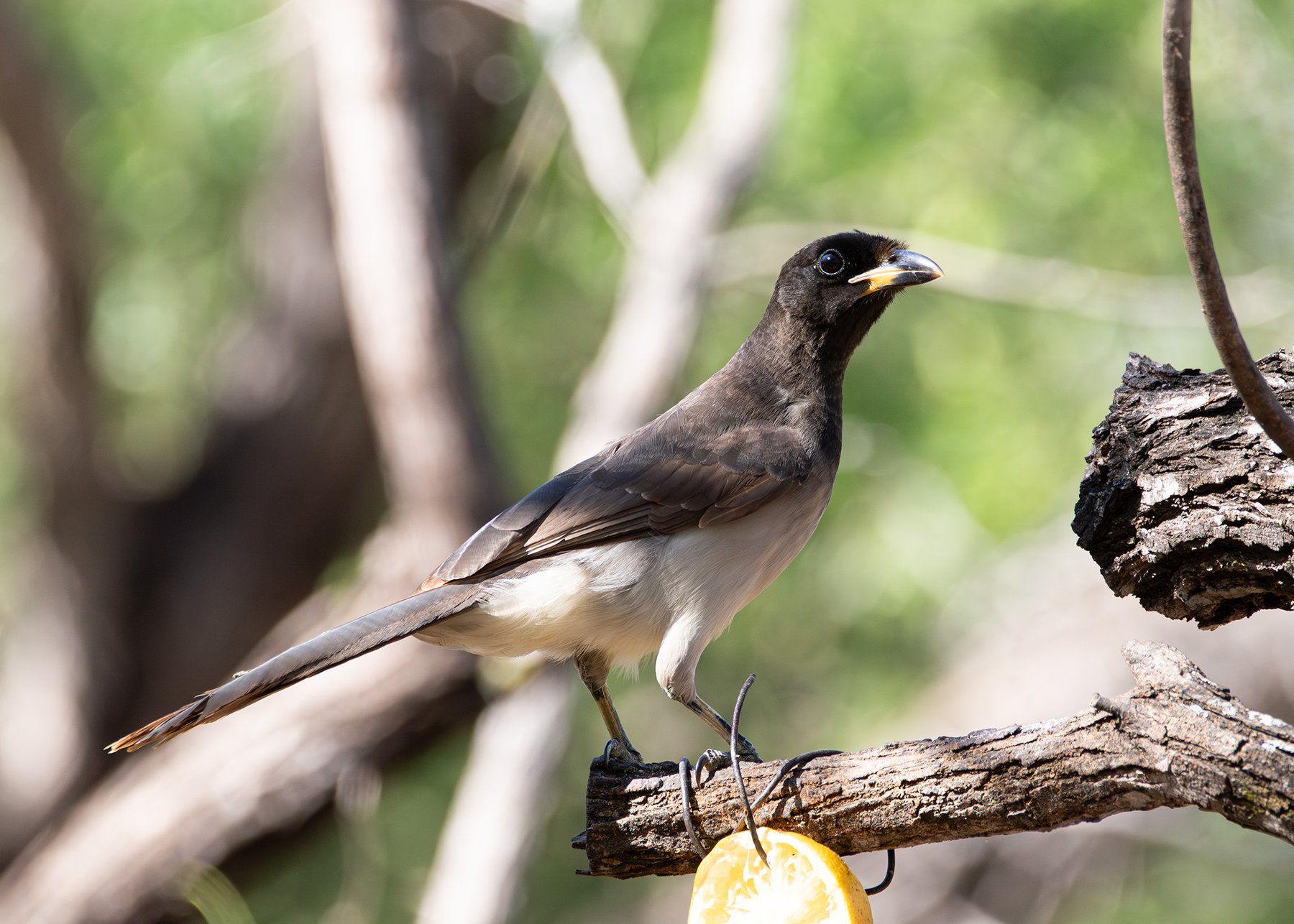
The story of Salineño begins in the 1980s, when Pat and Gale DeWind set up bird feeders at their property along the river. What they attracted was extraordinary. Brown Jays — a large, social corvid found nowhere else in the United States outside the immediate border region — began visiting regularly. Word spread quickly through the tight-knit birding community, and Salineño began appearing on the itineraries of serious birders making the pilgrimage to the Rio Grande Valley.
The feeders did more than draw Brown Jays. The combination of native riparian vegetation, proximity to the river, and the supplemental food source created a magnet for neotropical species crossing from Mexico — birds that had no reliable foothold anywhere else in the country. Salineño became known as one of the few places in the United States where a visiting birder could reasonably expect to find species otherwise confined to Mexico and Central America.
Recognizing the ecological significance of the site, the Valley Land Fund (VLF) worked with the DeWinds to protect it permanently. The land was formally donated to the VLF in 1998, with the remainder of the property purchased in 2011. The preserve now operates in collaboration with the U.S. Fish & Wildlife Service and is maintained largely through volunteer efforts — continuing a tradition of community-driven stewardship that traces directly back to the DeWinds' original feeders.
The Birds That Made Salineño Famous
The species list at Salineño reads like a checklist of neotropical targets that birders travel thousands of miles to find. A small number of species in particular have defined the preserve's reputation and continue to draw visiting birders year after year.
Brown Jay
A large, chocolate-brown jay with a noisy, raucous personality, the Brown Jay is found in the US only along a very limited stretch of the upper Rio Grande. Family groups move through the riverside woodland in waves, calling loudly and drawing attention to themselves despite their relatively drab plumage. The combination of their size, behavior, and extreme rarity in the US makes a Brown Jay sighting genuinely exciting.
The Brown Jay put Salineño on the map in the 1980s and 90s, when family groups were reliable visitors to the feeding station. That is no longer the case. Long-time birders reported the last sighting prior to 2025 was around 2011 or 2012. A single Brown Jay reappeared at the Salineño feeders in November 2025 — staying approximately 30 days before moving on. The bird is believed to have been part of a Brown Jay family group found at a private ranch one to two miles downriver. That family group has been regularly present at that location for the past several years, making it the only reliable location to see Brown Jays in the US — though access is restricted to guided groups only.
Red-billed Pigeon
The Red-billed Pigeon is a large, handsome pigeon — mostly dark purplish-gray with a bright red bill — that occurs regularly along the upper Rio Grande and is reliably seen at Salineño. Perched birds in the tall trees along the river are often conspicuous in the early morning, and flyovers are frequent. Like the Brown Jay, this is a US rarity that birders specifically target at Salineño.
Orioles
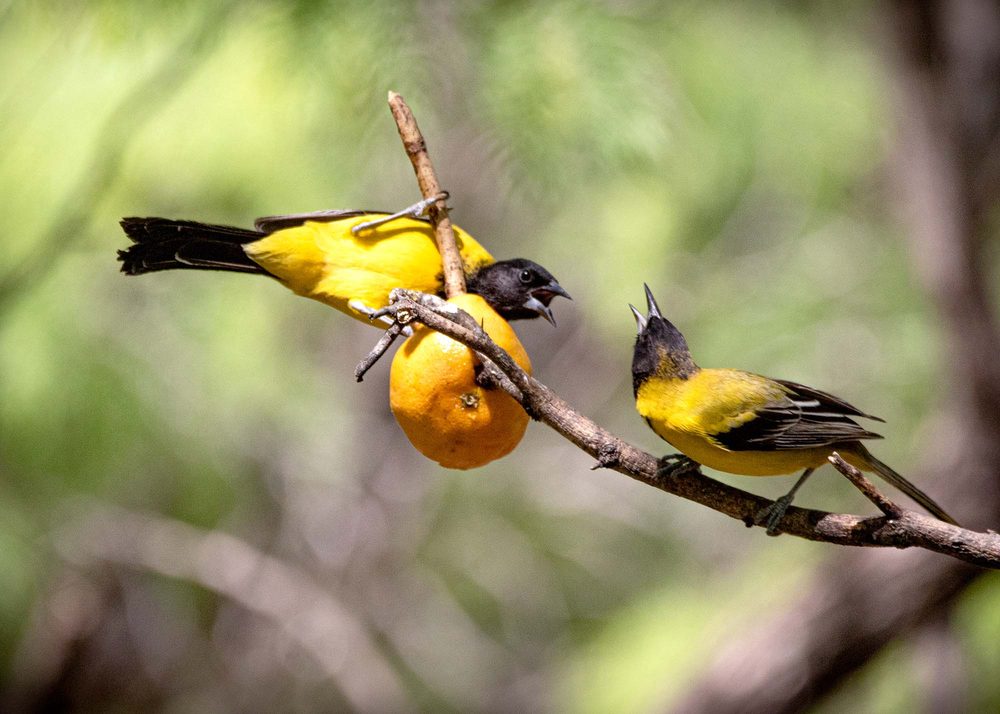
Audubon's Oriole, Altamira Oriole, and Hooded Oriole are all regular at Salineño's feeding station. Audubon's Oriole in particular is a skulking, understory species that can be difficult to observe well at many locations; the orange station at Salineño brings it into the open with unusual regularity. The combination of multiple oriole species at a single site, often alongside Green Jays and Chachalacas, makes the preserve one of the most productive morning stops in the upper Valley.
Hook-billed Kite & Morelet's Seedeater
The Hook-billed Kite — a distinctive, polymorphic raptor with a dramatically curved bill adapted for extracting snails — soars over the river corridor regularly, particularly in the morning hours. Morelet's Seedeater, one of the RGV's most sought-after specialty birds, occurs in the grassy and weedy edges along the river at Salineño, where the habitat suits it well.
Kingfishers
The river corridor at Salineño is one of the most reliable locations in Texas for all three regularly occurring kingfishers. The Ringed Kingfisher — the largest kingfisher in the Americas — is a regular presence along the Rio Grande, often perching conspicuously on snags above the water. The Belted Kingfisher is the most widespread of the three and frequently seen along the river and at the boat ramp. The much smaller Green Kingfisher rewards patient watching along the quieter stretches of riverbank. Seeing all three species in a single morning is a realistic expectation at Salineño — a combination not easily matched anywhere else in the US.
The Feeding Station — More Than Just Feeders
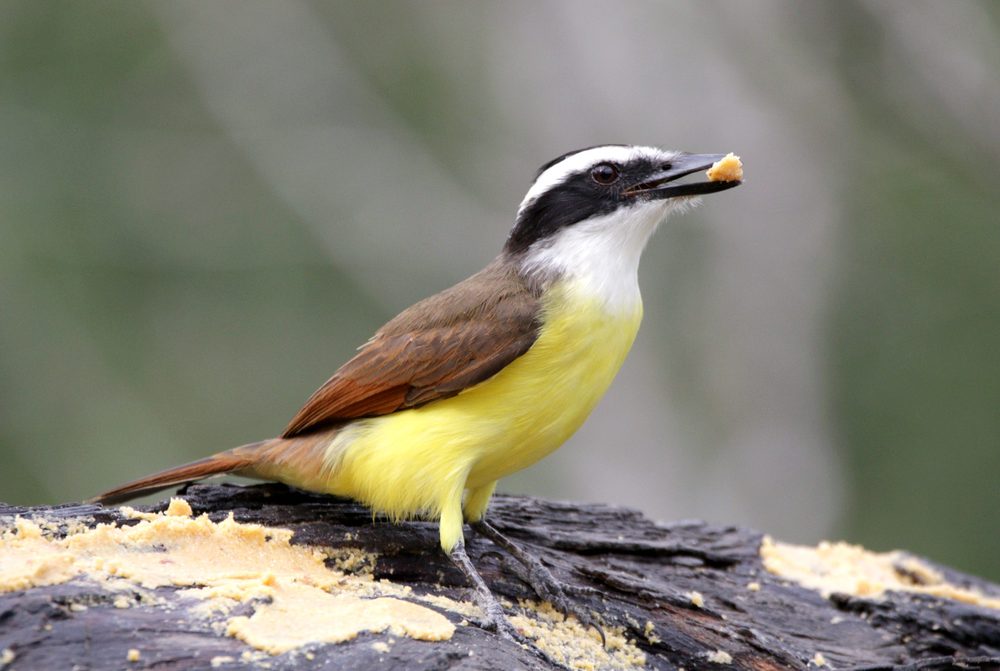
The feeding station at Salineño is one of the great birding spectacles in the upper Valley, where the social dynamics are as entertaining as the birds themselves. A classic scene: an Oriole poking a Great Kiskadee out of the way to claim the orange — assertive behavior from a species visitors rarely expect to be bold. The oranges draw Orioles and Green Jays, while the peanut butter mix proves irresistible to Golden-fronted Woodpeckers and Chachalacas. Sunflower seeds and peanuts bring in Black-crested Titmice, Green Jays, and Northern Cardinals. Meanwhile, White-tipped Doves, Inca Doves, and Olive Sparrows work the ground below for seeds — and Northern Bobwhite round out a feeding station list that would be remarkable anywhere else in Texas.
Arrive early. The feeding station is most active in the first two hours after sunrise, when orioles and chachalacas are at their most visible. Scan the tall trees along the river for Red-billed Pigeons and Hook-billed Kites — both species are often seen perching or soaring in the early morning. The boat ramp area and riverbank are the best vantage points for watching the river itself. Note that the feeding station operates seasonally, from November 1 through March 15 — plan visits outside that window around the river and riparian habitat rather than the feeders themselves.
Historic Sightings — When the River Delivers Something Extraordinary
Salineño's location on the Rio Grande, directly opposite the Mexican shoreline, means that vagrant species crossing the border have a natural first landing point here. Over the years the preserve has produced some of the most remarkable sightings in Texas birding history — birds that sent ripples through the national birding community and brought hundreds of observers to this quiet stretch of riverbank.
On January 29, 2024, a Crane Hawk was discovered at the end of the road in Salineño, directly on the Rio Grande — a sighting that immediately ignited the birding community. The bird was observed foraging on both the US and Mexican sides of the river, perching on islands mid-river and using its remarkable long, double-jointed legs to extract prey from crevices in tree bark — a feeding technique unlike any other North American raptor.
The Crane Hawk remained in the area through late January and into early February 2024, drawing large groups of birders to Salineño daily. If accepted by the relevant records committees, this sighting would represent only the second confirmed US record of the species — the previous accepted record dating to 1988.
The Bare-throated Tiger-Heron — a large, striking wading bird of Central American tropical lowlands — has made multiple appearances at Salineño, establishing the preserve as its most reliable Texas address. Typically found hunting alone near the boat ramp and riverbanks, the bird stands motionless for extended periods, waiting for fish or frogs in a manner that seems almost prehistoric. Its finely barred plumage, bare yellow throat patch, and sheer size make it unmistakable.
Sightings at Salineño in late 2023 and early 2024 generated significant excitement. Each appearance draws birders from across the country, and the bird's tendency to return to the same stretch of riverbank has made Salineño the first location any Texas birder checks when reports of this species emerge.
The Preserve Today
Salineño Wildlife Preserve continues to operate as it always has — through the dedication of volunteers, the support of the Valley Land Fund, and the collaboration of the U.S. Fish & Wildlife Service, whose adjacent Kepler tract forms part of the Lower Rio Grande Valley National Wildlife Refuge. The feeding station remains active, maintained by the same volunteer ethic that the DeWinds established four decades ago.
The preserve's small size belies its outsized ecological role. In an intensively farmed and developed landscape, this 2.6-acre remnant of native riparian vegetation functions as a critical corridor — a place where birds crossing the river have cover, food, and water within moments of touching down on US soil. Its value is not measured in acreage but in what it represents: a protected thread of habitat connecting the birding world to species that exist, for most North American observers, only in field guide plates and distant dreams.
Recent Sightings at Salineño
Live data from eBird — species reported at Salineño Wildlife Preserve in the last 14 days. Updated each time you load the page.
Plan Your Visit to Salineño
Use the RGV Bird Finder to check recent sightings before you go — or follow the Salineño Facebook group for the latest updates from the preserve.