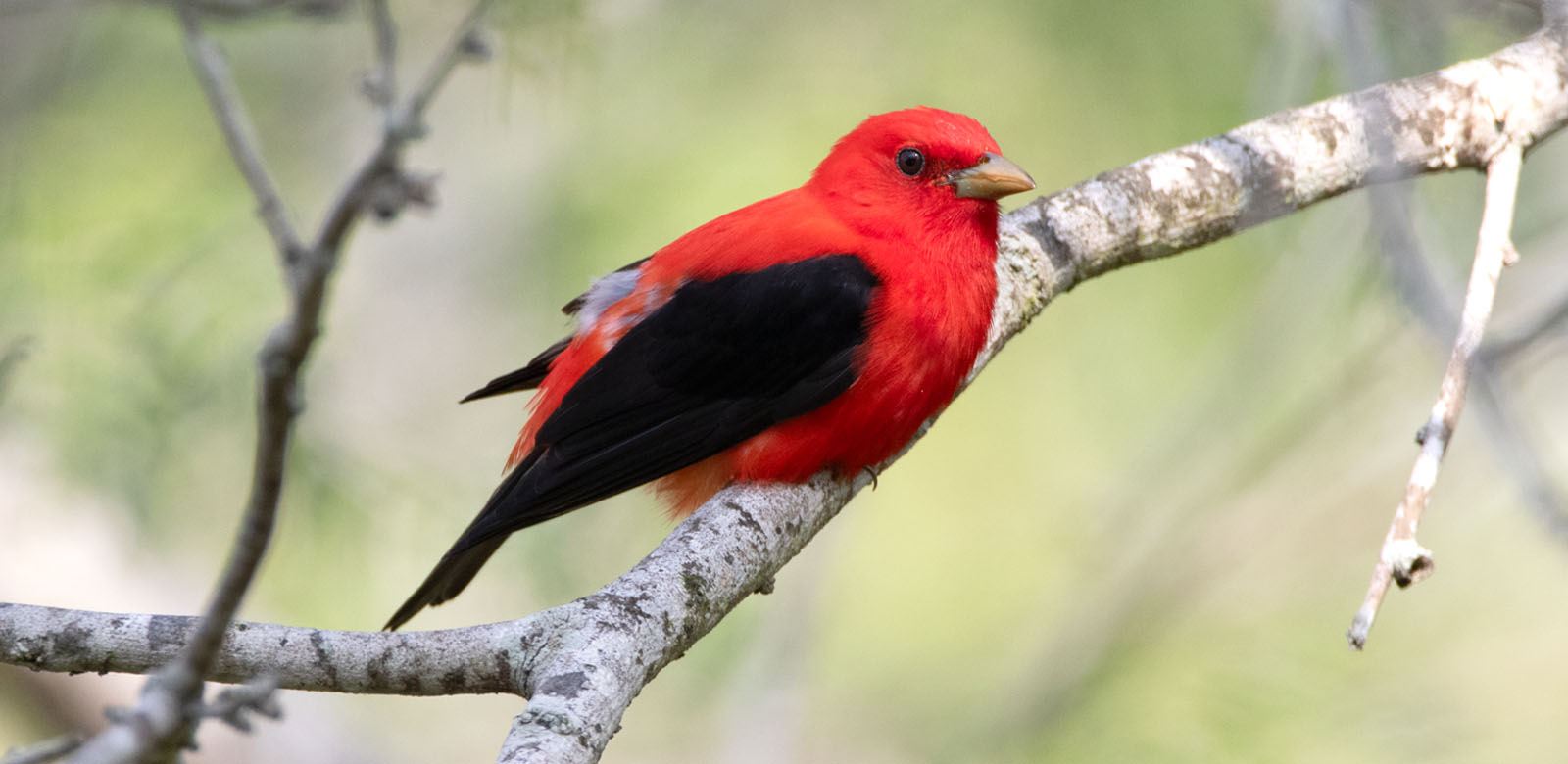
The 2026 spring migration season at South Padre Island ran from mid-April through early May, delivering a historic April 19–20 fallout event, multiple rare western warblers, and exceptional diversity across all three key locations. This page documents the full season record.
South Padre Island Spring Migration 2026 — A Record Season
The 2026 spring migration season at South Padre Island delivered exceptional birding from early April through early May. A historic April 19–20 fallout event anchored the season, with remarkable sightings continuing across five more reporting periods through May 3. Final species count across all three key locations: 36 warbler species, 12 tanager/oriole/bunting species, and 52 notable migrant species documented.
- Mourning Warbler — confirmed at 2 locations same day (Apr 27 & May 3)
- MacGillivray's Warbler ★★ — rare western stray, both VLF & Conv. Center (May 3)
- Mangrove Yellow Warbler — confirmed across 4 consecutive weekends
- Parasitic Jaeger — exceptional offshore find (Apr 27)
- Cerulean Warbler — multi-week stay Apr 19 through May
- Red Knot ×40 — outstanding shorebird count (Apr 27)
- Ruby-throated Hummingbird ×25
- Baltimore Oriole ×22
- Gray Catbird ×24
- Tennessee Warbler ×16
- Indigo Bunting ×16
- Rose-breasted Grosbeak ×15
What's Being Reported
Reports through May 3. The forecast wind shift delivered a genuine fallout event across all three SPI locations May 2–3. The historic April 19–20 event is documented at the bottom of this page.
The VLF lots were exceptional both days. Mourning Warbler confirmed May 3 — a genuine rarity, now its second confirmed appearance of the season. MacGillivray's Warbler on May 2 — a rare western vagrant, excellent find. Canada Warbler May 2. Black-billed Cuckoo May 2. Olive-sided Flycatcher ×2 and Alder Flycatcher both May 3. Green Jay on May 3 was a genuine surprise at this location. Mississippi Kite noted. Indigo Bunting ×12 still grounded. Blackburnian Warbler and Bay-breasted Warbler both logged. Strong supporting cast: Golden-winged Warbler ×2, Black-and-white Warbler ×4, American Redstart ×4, Common Yellowthroat ×5, Magnolia Warbler ×3, Scarlet Tanager, Summer Tanager ×2, Rose-breasted Grosbeak ×2, Painted Bunting ×2, Bullock's Oriole ×3, and Swainson's Thrush ×8.
The Birding Center held a strong mix of migrants both days. Canada Warbler confirmed May 3 — all three locations same day. Bay-breasted Warbler ×3 was a strong count. Black-billed Cuckoo and Alder Flycatcher both May 3. Olive-sided Flycatcher and Yellow-bellied Flycatcher logged. Mangrove Yellow Warbler still present May 3 — now spanning multiple weeks. Mississippi Kite ×2 and Broad-winged Hawk overhead. Cedar Waxwing and Yellow-headed Blackbird both May 3. Hudsonian Godwit ×4 on May 2. Willow Flycatcher noted. Ringed Kingfisher May 3. Good warbler diversity: Blackburnian, Chestnut-sided, Prothonotary, Hooded, Black-and-white, Magnolia, Tennessee, and Canada all recorded. Scarlet and Summer Tanager, Orchard Oriole ×3, Painted Bunting, and Indigo Bunting completing a strong fallout day.
The Convention Center produced the most compelling species list of the weekend. Mourning Warbler confirmed May 3 — both the VLF lots and Conv. Center on the same day. MacGillivray's Warbler May 3 — another two-location day for a rare western stray. Canada Warbler at all three locations. Chuck-will's-widow on May 2 — unexpected and excellent. Buff-breasted Sandpiper ×6 on May 2 — a quality shorebird find. Yellow-bellied Flycatcher ×4 May 3 — strong count. Alder Flycatcher and Willow Flycatcher both confirmed. Mangrove Yellow Warbler May 3 — confirmed at Convention Center as well. Clay-colored Thrush and Olive Sparrow on May 2. Cedar Waxwing, Yellow-headed Blackbird, and Broad-winged Hawk May 3. Anhinga ×3 noted. Black Tern ×5 May 2. Bay-breasted Warbler and Blackburnian Warbler also recorded. Baltimore Oriole ×4, Rose-breasted Grosbeak ×2, Summer Tanager ×2, and Painted Bunting ×2 completing the picture.
Volunteers put out fruit and oranges at the open side of the Valley Land Fund lot on Sheepshead St. — and at the SPI Convention Center as well. During migration, Scarlet Tanagers, Summer Tanagers, Orchard Orioles, and Painted Buntings all come to the fruit, giving you sustained close looks at birds that are normally too energetic to study well. Don't skip either stop.
Through May 3 — Confirmed Migrants
The following species have been confirmed at South Padre Island through May 3, 2026, across all three key locations. Species marked ★ are notable or uncommon for the location. Click any species to search recent sightings in the Bird Finder.
What to Expect — Fallout Forecast
April is peak season at South Padre Island and conditions are active. Birds arriving after Gulf crossings — exhausted and hungry — make for close, extended looks as they refuel at water features and fruiting vegetation. Activity tends to be most concentrated in the early morning hours, when new arrivals are moving through the vegetation with purpose.
Migration will continue in waves through late April and into early May. Watch the weather: south winds push birds north quickly and quiet the island, while a cold front or sustained north winds can ground a fresh wave of migrants overnight. Check eBird reports and local birding groups the morning after any significant weather shift — those are often the best days to be on the island.
The April 19–20 Fallout — A Historic Event
One of the most remarkable two-day migration events in recent SPI history. Peak counts: Ruby-throated Hummingbird ×20, Baltimore Oriole ×22, Indigo Bunting ×12, Tennessee Warbler ×16, Gray Catbird ×24, Hooded Warbler ×7, Prothonotary Warbler ×6, White-faced Ibis ×45, and Rose-breasted Grosbeak ×15. Rare species confirmed: Black-billed Cuckoo (two locations), Olive-sided Flycatcher, Veery, Gray-cheeked Thrush, Western Tanager, Chestnut-sided Warbler (×6), Prairie Warbler, Wilson's Warbler, Magnolia Warbler, and Golden-winged Warbler. The complete confirmed species checklist above documents the full event through May 3.
Planning a Trip to South Padre Island?
Read our full guide to spring migration fallouts at South Padre Island — what causes them, how to time your visit, and what to expect at each location.