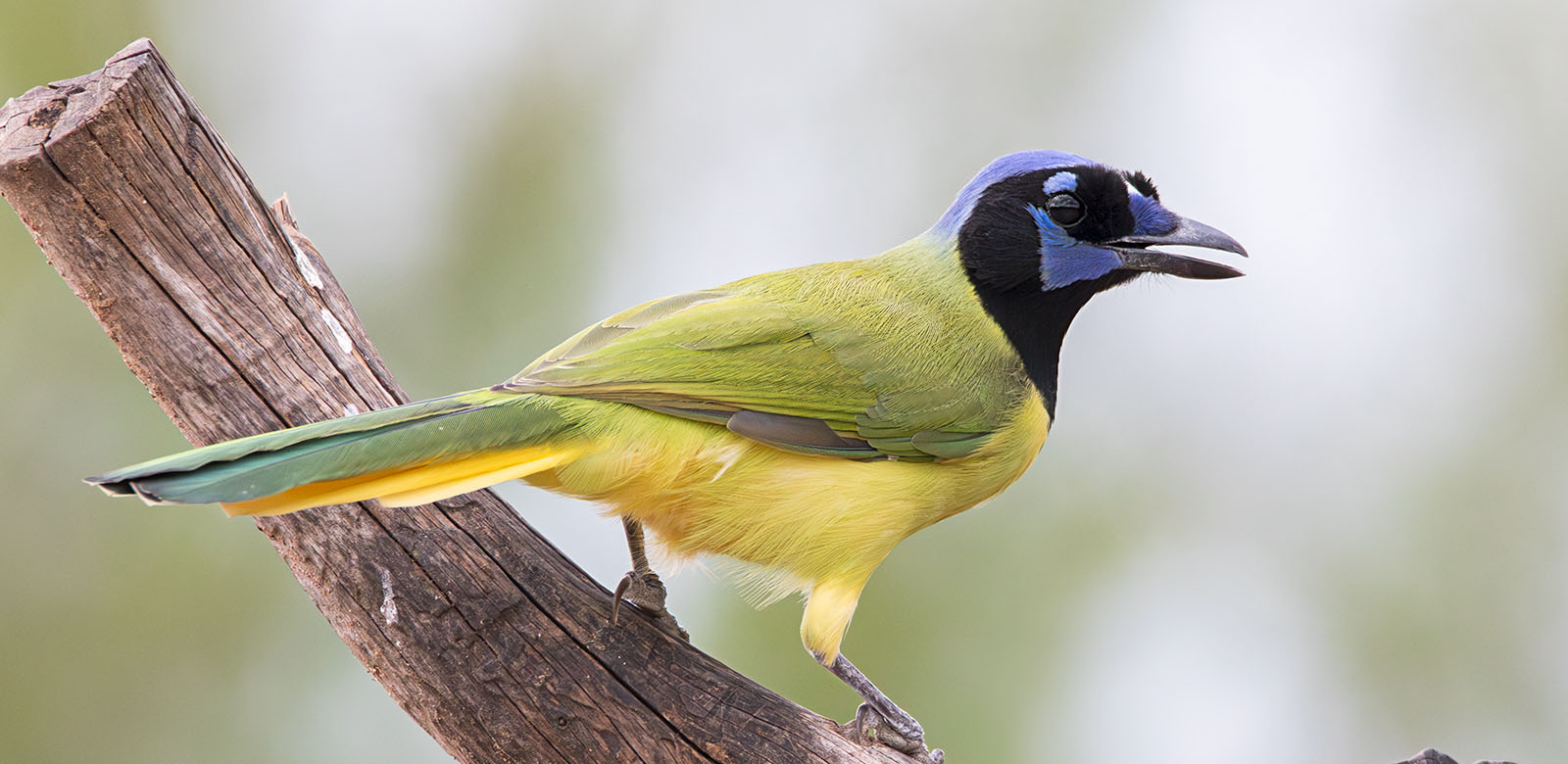
No birding destination in the United States delivers quite like the Rio Grande Valley. This narrow subtropical corridor along the Texas-Mexico border is the only place in the country where you can see Green Jays, Altamira Orioles, Hook-billed Kites, and Ringed Kingfishers — often in a single morning. These are the 25 specialty birds every visiting birder comes to find.
The RGV sits at a biological crossroads — the northernmost reach of the Tamaulipan thornscrub ecosystem, where Mexican and Central American species push into the U.S. for the first time. The result is a list of birds that serious listers simply cannot find anywhere else in the country. Some are common and easy. Some will test your patience for years. All of them are worth the trip.
This list was compiled by cross-referencing multiple authoritative regional bird lists and weighted by how specifically each species draws visiting birders to the Valley — not just presence, but target-worthiness. The result is the most comprehensive and honest ranking of RGV specialty birds available.
Each entry includes where to find it, best season, and difficulty. Click any → Live sightings link below to jump directly to that species in the Bird Finder and see where it's been reported in the last 30 days.
These four species define what it means to bird the Rio Grande Valley. Colorful, charismatic, and found nowhere else in the United States, they are the birds every first-time visitor comes to see — and the birds that keep experienced birders coming back.
These seven species appear on every serious RGV birding itinerary. Some are reliably findable; others require strategy and patience. All are birds that visiting birders specifically plan their trip around.
Few birds in the U.S. generate more excitement than the Hook-billed Kite. This medium-sized raptor — named for its dramatically curved bill, evolved for extracting snails from their shells — is one of the most sought-after and elusive birds in North American birding. It is found in the U.S. only in the RGV, and even here it is never guaranteed. The best strategy is to position yourself on the levee trail at Santa Ana NWR between 9 and 11 AM, when birds soar on thermals above the forest canopy. When one appears, the reaction from the crowd is always the same — binoculars go up in unison and the whispers start.
The largest kingfisher in North America — nearly twice the size of the familiar Belted Kingfisher — the Ringed Kingfisher is a dramatic bird in every sense. Its oversized bill, loud rattling call, and preference for perching on exposed branches over the Rio Grande make it surprisingly easy to find once you know where to look. The bird is closely tied to the river corridor; Salineño Wildlife Preserve and the banks below Bentsen SP are the most reliable spots. Seeing three kingfisher species in one morning — Ringed, Belted, and Green — is a genuine possibility in the RGV and a memorable achievement for any visiting birder.
The only hummingbird that regularly breeds and winters in the Rio Grande Valley, the Buff-bellied Hummingbird is a handsome bird — metallic green throat, buffy belly, and a distinctive red bill with a dark tip. Unlike most hummingbirds that leave the region in winter, this species is a year-round resident along the Gulf Coast and RGV. It is found at flowering plants and feeders throughout the Valley, and is particularly reliable at Sabal Palm Sanctuary and Estero Llano Grande SP, where planted gardens attract it reliably. An underrated specialty that rewards careful attention.
Small, secretive, and easy to overlook, the Green Kingfisher rewards patient observation. This tiny kingfisher — barely larger than a sparrow — is dark metallic green above with white spots and a chestnut breast band on males. It perches low over still or slow-moving water, often in the shadows of overhanging vegetation, scanning for small fish. The resacas and drainage channels of the Valley are its preferred habitat. Estero Llano Grande SP and the channels at Santa Ana NWR are the most reliable spots. Seeing all three Valley kingfishers — Ringed, Green, and Belted — in a single day is a popular challenge.
Larger and heavier than a Mourning Dove, the White-tipped Dove is a ground-dwelling bird of the dense thorn scrub understorey. Its low, hollow call — a deep, resonant oom-oom-ooom — is one of the characteristic sounds of the Valley's forest interior. The bird itself is subtly beautiful: warm brown above, pinkish-buff below, with distinctive white tips on the outer tail feathers visible in flight. It forages quietly on the ground beneath feeders and along shaded trails. Reliable at Bentsen SP and Santa Ana NWR, where it's often seen walking slowly through the leaf litter at dawn.
One of the most characteristic birds of the Tamaulipan thornscrub, the Long-billed Thrasher is a large, boldly streaked songbird with a long, slightly curved bill and bright orange eyes. Similar to the more familiar Brown Thrasher but with a longer bill, colder gray-brown tones, and blacker streaking below. It is a bold visitor to feeders — often one of the first birds to arrive at dawn at Bentsen SP's feeding stations — and its rich, varied song is a pleasure to hear from dense brush. Found throughout the Valley in thorn scrub habitat, it is reliable at any of the major hotspots with good understory cover.
Secretive and understated, the Olive Sparrow is a bird you hear far more often than you see. Its dry, accelerating trill — like a bouncing ball coming to rest — is a constant background sound in the Valley's thorn scrub. The bird itself is olive-green above with rusty-brown crown stripes and a plain, buffy face, blending perfectly into the dense underbrush where it forages by leaf-scratching. Getting a clear look requires patience — stand quietly near dense cover and wait. Bentsen SP's woodland trails and the understory at Santa Ana NWR are among the best spots, where Olive Sparrows regularly forage in the open at dawn.
This group spans the full range of the Valley's ecological diversity — from the secretive thorn scrub specialists to the iconic raptors of the coastal prairie and Rio Grande corridor. Each one requires a slightly different strategy to find.
Once a true rarity that birders would drive hundreds of miles to see, the Clay-colored Thrush is now a permanent breeding resident in the Valley — a remarkable range expansion that has happened within living memory. Plain warm-brown throughout, with a dull yellowish bill, it looks like a washed-out American Robin — which it closely resembles in behavior and song. Its rich, melodic singing is a giveaway; the song is slower and more varied than a Robin's. Quinta Mazatlán in McAllen hosts the highest density of Clay-colored Thrushes in the U.S., where they can be seen year-round in the gardens and woodland paths.
A striking yellow-and-black oriole of the drier upland thorn scrub, Audubon's Oriole is one of the more secretive of the Valley's specialty birds. Unlike the bold Altamira Oriole which comes readily to feeders, Audubon's tends to stay within dense thorny vegetation, foraging quietly and flushing easily. Its song — a slow, whistled series of notes with an almost human quality — is the most reliable way to locate it. Bentsen SP's woodland trails are the most reliable spot, particularly in winter when birds become more regular at the feeding stations. Patience and early morning timing are essential.
One of the most beautiful raptors in North America, the Gray Hawk is a medium-sized buteo of riverside gallery forest. Adults are pale gray above with finely barred gray-and-white underparts and a boldly banded tail — clean and elegant in pattern. Its range in the U.S. is limited almost entirely to the Rio Grande corridor in south Texas and the riparian canyons of Arizona. In the RGV, it is most reliably found perched in large trees along the Rio Grande at Santa Ana NWR's levee trail and the woodland edges at Bentsen SP. Its sharp, descending call often reveals its presence before the bird is visible.
A large, dark pigeon of the Rio Grande corridor — larger than a Rock Pigeon, with rich purplish-maroon plumage, a pale gray belly, and a distinctive red bill with a pale tip. The Red-billed Pigeon is found in the U.S. only along the river in the western part of the Valley, making Salineño Wildlife Preserve the premier destination. Here, birds are regularly seen flying over or perched in the tall riverside trees at dawn. The Salineño feeding area also draws them in proximity. Like many Rio Grande specialists, the best viewing is from the river bank early in the morning before temperatures rise.
One of the most desired lifers for visiting ABA birders, the Ferruginous Pygmy-Owl is a tiny, diurnal owl that has become increasingly rare and localized in the RGV. Reddish-brown with streaked underparts and a long tail for an owl, it is active during the day and draws in small songbirds with its repetitive tooting call — which makes playback-assisted searching particularly effective. Its population in the Valley has declined significantly, and it is now reliably found at only a handful of private ranches and select parks. Advance research on recent eBird reports is essential before planning a trip specifically for this species.
A master of camouflage, the Common Pauraque is a nightjar that roosts on the ground or on low branches during the day, relying on its cryptic mottled brown, gray, and black plumage to vanish against leaf litter. Walking the trails at Santa Ana NWR or Bentsen SP at dawn often means nearly stepping on one before it flushes, flashing the white patches in its wings and tail. At night, its distinctive "pa-WEEEER" call echoes from the forest edges throughout the Valley. Finding a roosting bird during the day — and photographing it in its leaf-litter disguise — is one of the most satisfying discoveries in RGV birding.
A handsome, sociable raptor — dark brown with rich chestnut shoulders and leg feathers, a bright white base to the tail, and a yellow cere — Harris's Hawk is famous for its cooperative hunting behavior, where family groups work together to flush and capture prey. In the RGV, it is a bird of open country, mesquite savanna, and desert scrub, often seen perched on utility poles, fence posts, or dead snags in the open. Family groups are frequently encountered along roadways in rural areas throughout the Valley. The Laguna Atascosa Lakeside Drive auto loop is one of the best places to encounter multiple birds together.
One of the great conservation success stories of the RGV, the Aplomado Falcon was extirpated from Texas by the mid-20th century but has been successfully reintroduced to the coastal prairies of the Valley and is now a breeding resident. A sleek, beautiful falcon — slate-gray above, with a bold facial pattern, rusty belly-band, and long barred tail — it hunts actively in early morning from exposed perches or in soaring pursuit of dragonflies and small birds. Laguna Atascosa NWR's coastal prairie is the most reliable spot; scan fence posts and power lines along the Lakeside Drive auto loop at sunrise for the best chance.
Formerly known as the White-collared Seedeater, this tiny finch was recently split into two species, with birds in the Rio Grande Valley now recognized as Morelet's Seedeater. The male is a small, round-headed bird — black above with a white collar and wing bars, buffy below — while the female is a nondescript warm brown. Historically found in the tall cane (Arundo) along the Rio Grande from Salineño to Zapata and San Ygnacio, its population has declined dramatically in recent years and reliable sightings are now far less frequent. When present, it clings to grass stems while feeding. Check recent eBird reports before making a dedicated trip.
These five species round out the list — some are reliable if you visit the right spots, others are irruptive rarities that draw birders from across the continent when they appear. All are memorable finds.
A large, majestic hawk of the coastal grasslands and prairies, the White-tailed Hawk is one of the most distinctive raptors in the Valley. Adults are pale below with a gray back, rusty shoulder patches, and a bright white tail with a narrow dark terminal band — unmistakable in flight. It soars over open country, often following grass fires to catch flushed prey. The Laguna Atascosa auto loop and the agricultural fields along the coast between Brownsville and Port Mansfield are reliable spots. It's a common sight once you venture into the open coastal prairie — a reminder that the Valley's habitats extend well beyond thorn forest.
A stocky, large-headed flycatcher from Mexico and Central America, the Rose-throated Becard is one of the most exciting rare finds in the RGV — and one that occasionally stays long enough for visiting birders to connect. Males are striking: gray above, pale below, with a distinctive rose-pink throat patch. They build enormous, gourd-shaped hanging nests that are easier to spot than the birds themselves. When present, they tend to stay in the upper canopy of tall riparian trees. Bentsen SP and Santa Ana NWR have hosted the most reliable individuals in recent years. Always worth checking recent eBird reports before a visit.
Native to northeastern Mexico and now recognized as a countable established population by the ABA, the Red-crowned Parrot has become one of the most charismatic spectacles in RGV birding. Flocks of these noisy, brilliant green parrots — identified by the male's red crown and the distinctive "kree-ow" calls — have become a fixture in the urban neighborhoods of Brownsville and McAllen. The best viewing is at traditional roost sites, where dozens to hundreds of birds come in noisily at dusk. Driving the residential neighborhoods of Brownsville near palm trees and fruit-bearing trees at dawn or dusk is the most reliable approach. Their wild energy and sheer numbers make any encounter memorable.
A large, chocolate-brown jay with a noisy, raucous personality, the Brown Jay is found in the U.S. only along a very limited stretch of the upper Rio Grande. Family groups move through the riverside woodland in waves, calling loudly and drawing attention to themselves despite their relatively drab plumage. The combination of their size, behavior, and extreme rarity in the U.S. makes a Brown Jay sighting genuinely exciting.
The Brown Jay put Salineño Wildlife Preserve on the map in the 80's and 90's, but the feeder area there is no longer a reliable spot. A single Brown Jay appeared at the Salineño feeders in November 2025 — the first sighting in the feeder area in 13 years — and stayed approximately 30 days. The bird is believed to have been part of the Santa Margarita Ranch family group, which ranges the river corridor just one to two miles downstream. For the past 4–5 years, a Brown Jay family has been regularly appearing at Santa Margarita Ranch (LTC 079), located just one to two miles downriver from Salineño. This is now the only reliable location to see them in the U.S. — and access is restricted to guided groups only.
Perhaps the most exciting irruptive rarity on this list, the Crimson-collared Grosbeak is a Mexican species that occasionally pushes north of the border in winter — and when it does, birders come from across the country to see it. Males are stunning: black head and upperparts with a vivid crimson collar and breast, giving way to dark reddish below. When a reliable bird settles in at a feeding station, it can stay for weeks. Edinburg Scenic Wetlands has established itself as the most reliable site in the Valley for this species in irruption years. Not present every winter, but when it is, it drives entire birding trips on its own.
Strong candidates that just missed the list
- Couch's Kingbird / Tropical Kingbird — A genuine identification challenge that serious listers tackle, but requires expertise to separate from each other. Both occur in the Valley and are legitimate targets for advanced birders.
- Least Grebe — The smallest grebe in the Americas, found year-round on small ponds throughout the Valley. Reliable at Estero Llano Grande and Edinburg Wetlands. A delightful find that deserves more attention.
- Tropical Parula — A small warbler lacking the white eye crescents of Northern Parula. Rare but present in the Valley's thorn forest, and a genuine lifer opportunity for warbler enthusiasts.
- Groove-billed Ani — A bizarre, long-tailed black bird with a ridged bill and clumsy flight. Found in weedy fields and brushy areas throughout the Valley — often overlooked but always worth a second look.
Ready to Find Your Target Birds?
Check live eBird data for any species on this list — real-time sightings updated daily from across the Rio Grande Valley.